Metal conditioner
Penetrates the structure of the metal and forms exceptionally strong molecular bonds with it — the anchor the rest of the system builds on.
Ceramizator does not thicken your oil or coat your engine. It uses the friction itself as the energy source for a chemical reaction that rebuilds the working surface of the metal.
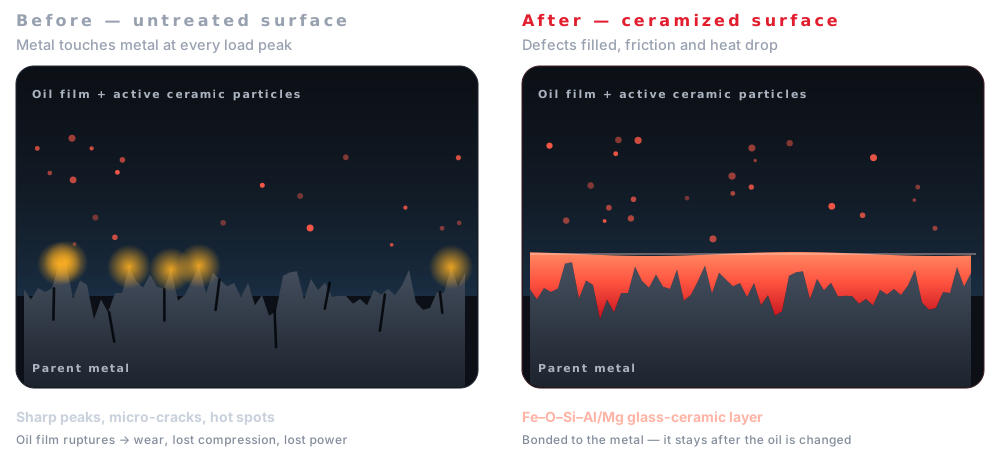
An internal combustion engine contains dozens of assemblies where metal slides directly against metal. Under high load, at start-up torque, or when the lubricating film simply cannot carry the pressure, those surfaces are not fully separated by oil — the film ruptures.
The result is stress concentrated on the contacting asperities, a burst of heat energy released at the contact point, and progressive destruction of the surface. Physically it shows up as wear. Practically it shows up as lost power, lower compression and rising oil consumption.
Modern engines have made this worse, not better: higher pressures, sharper thermal cycling, smaller oil volumes and longer service intervals all accelerate the process.
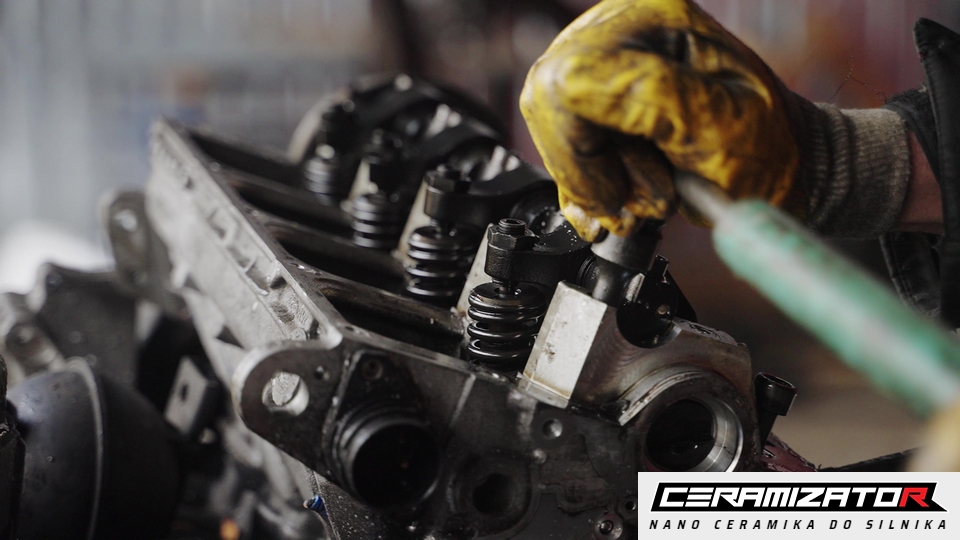
While the engine runs, the temperature inside the oil film spikes locally — at contact points it can reach 200–300 °C (roughly 390–570 °F). Under those conditions the ceramic particles in the additive are activated and react chemically with the metal surface.
This is tribochemistry: the reaction happens exactly where friction and pressure occur, and nowhere else. Particles settle into micro-cracks, cavities and surface defects and build a thin layer of glassy ceramic that strengthens the metal and smooths its microstructure. The surface effectively becomes self-healing — the heavier the load, the faster the protective layer forms.
The honing pattern on a cylinder wall — those fine cross-hatched grooves — exists to hold and distribute the oil film. A fair question is whether a revitalizer fills them in and ruins it.
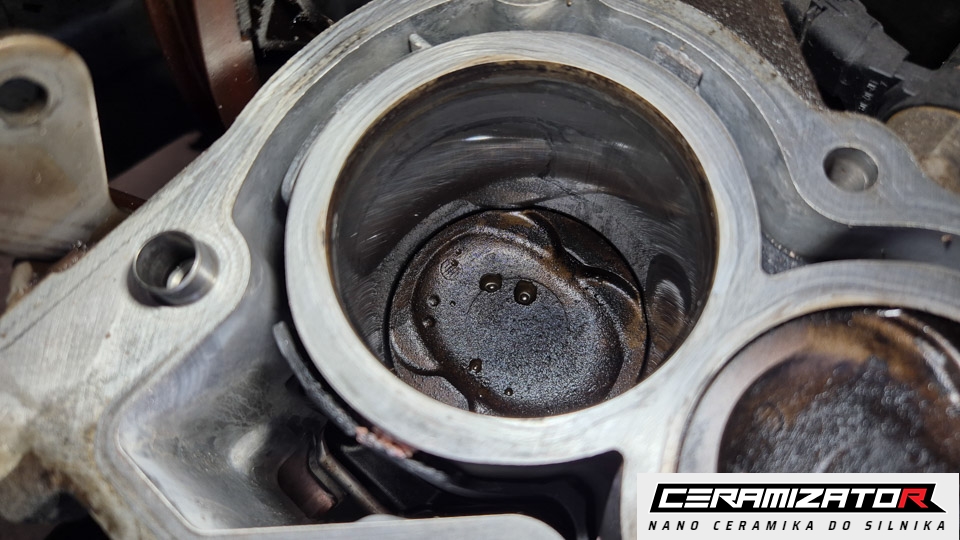
It does not. The functional honing grooves, deeper than 10 µm, are left untouched. What gets filled are the micro-cracks, burrs and sharp edges that cause excess oil consumption and accelerated wear in the first place. The end result is a more uniform surface that still traps oil where it is needed and seals the piston–ring–cylinder group better.
There is a second-order effect too. The oxide–silicate layer that forms is noticeably more polar than bare metal. It carries oxygen groups (–O⁻, –OH) that form hydrogen and ionic bonds with the polar molecules already in your oil.
A conventional additive improves the lubricant. A ceramic revitalizer is tribochemically active — it produces a durable protective layer as a product of reaction. That layer is glassy-ceramic in character and built from Fe–O–Si–Al/Mg bonds, which gives it very high resistance to abrasion, heat and corrosion.
Unlike coatings applied in a cold industrial process, this layer is created while the engine is running — locally, in the friction nodes, exactly at the points of contact and maximum load.
Traditional oil additives work by changing viscosity, raising TBN, or laying down an anti-wear film. They improve the oil's properties, but they do nothing about mechanical damage that has already happened to the surface.
A ceramic revitalizer goes further: it rebuilds the metal surface itself and creates a new working layer. That is why the effect is durable and persists after an oil change — the mechanism is metallurgical, not chemical housekeeping.
A ceramic revitalizer works over time. Within a few hundred miles of application there are noticeable changes: lower engine noise, improved compression, steadier running. Over a longer period the engine consumes less oil and its working components hold their geometry better.
The technology is used in passenger cars and trucks as well as in agricultural and industrial machinery. For transport fleets it matters most, because it directly reduces service costs and downtime.
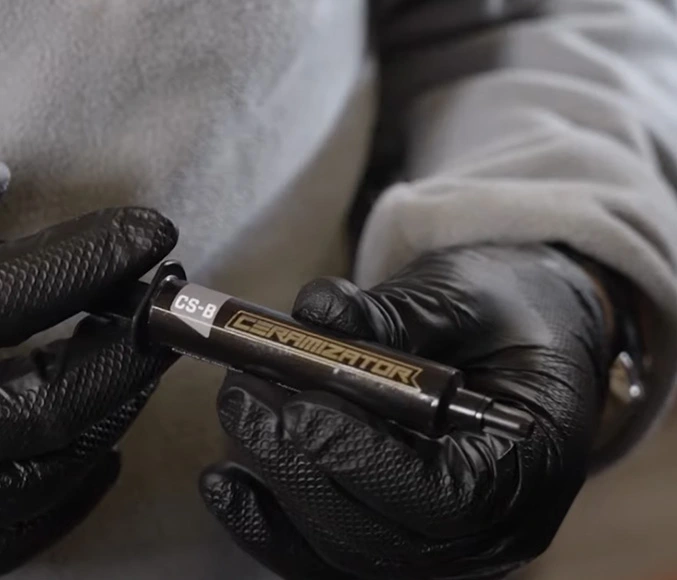
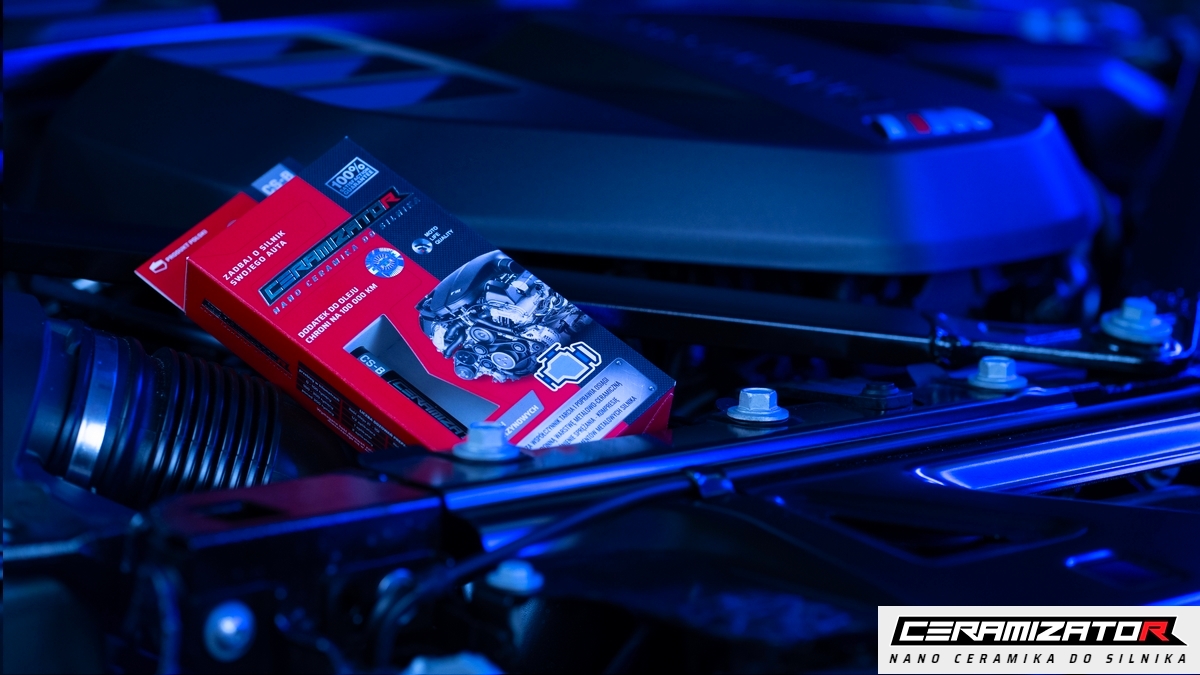
The Ceramizator CS‑B and CS‑D Ultimate formula combines three functions that are usually sold separately.
Penetrates the structure of the metal and forms exceptionally strong molecular bonds with it — the anchor the rest of the system builds on.
The ceramic revitalizer. Builds a hard, wear-resistant ceramic-metal coating on the working surfaces, regenerating micro-cavities and damage on engine components.
Keeps components moving freely against each other and lowers frictional resistance across the whole assembly.
NANO REVITAL ACTIVE was developed specifically to combine metal revitalization with a lower friction coefficient at the nanotechnology level. It is compatible with essentially any motor oil and can be used in engines fitted with catalytic converters and diesel particulate filters.
Compression measurements, tribological testing at the Automotive Industry Institute, and what the numbers mean for a normal car.